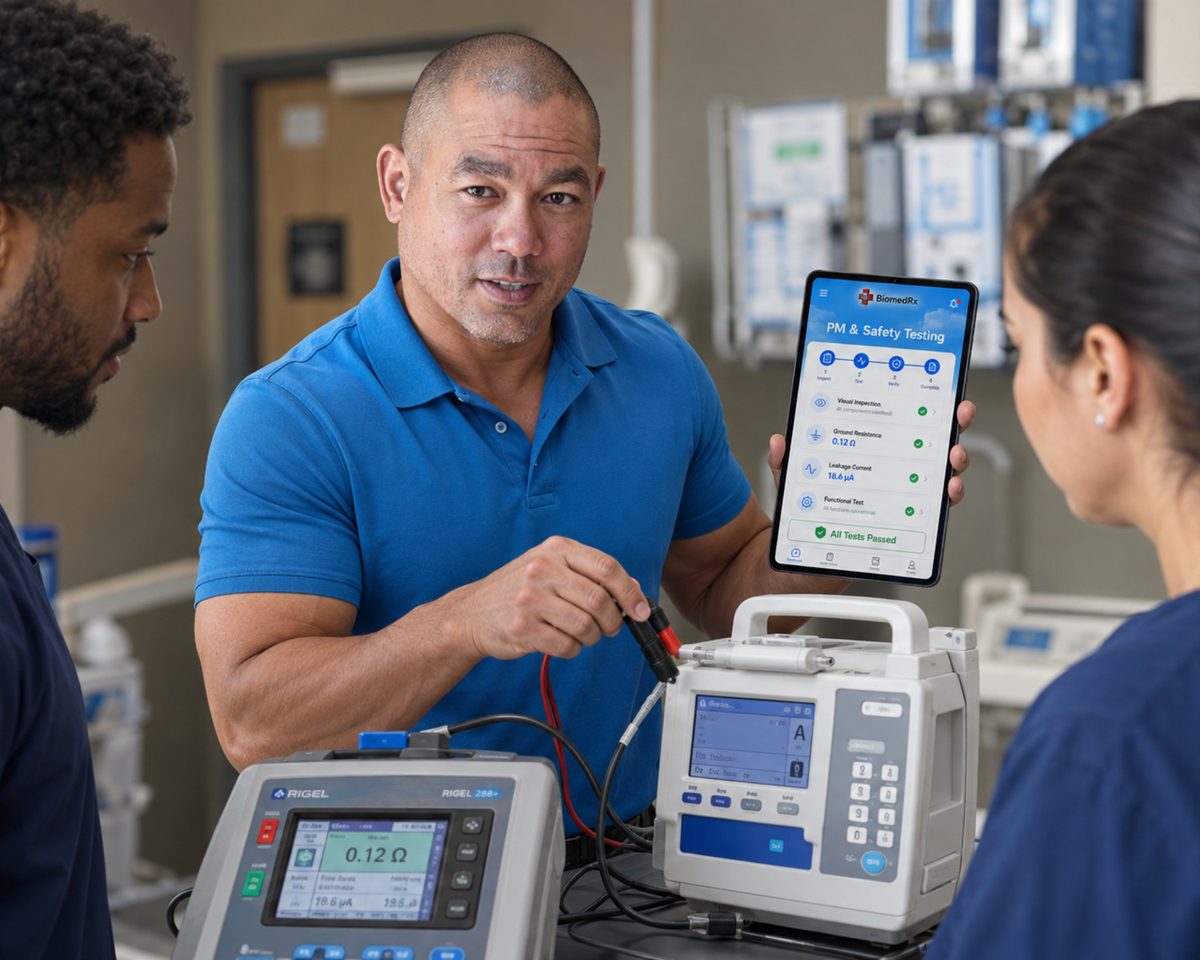
Aging Equipment Raises the Stakes for Service Areas
As installed devices age, service areas becomes mission-critical. Idaho Biomedical Services helps facilities extend equipment life safely and plan capital replacement with confidence.
Everything Idaho Biomedical Services publishes on service areas in one place: the full service overview, the related services we provide, and the locations we cover.
This is the index for service areas. If you already know which service you need, go straight to it below; if not, the full overview explains what each one covers.
Biomedical equipment work rewards method over speed. The device is inspected, measured against its specification, corrected where it has drifted, and the whole sequence is documented so the next technician starts from fact rather than from guesswork.
Work is performed to manufacturer specification and the applicable regulatory standard, and the record says which one was applied.
Every service visit should leave two things behind: equipment that performs to specification, and a record that proves it did on the day. Facilities discover which providers understood that during their first serious audit.
Equipment failure is rarely sudden. It is usually a drift that was measurable for months, which is why scheduled attention costs less than emergency response and disrupts far less.
Every visit produces documentation an inspector can read without a translator: what was done, to what standard, by whom, and when it is next due.
Technicians are qualified for the equipment they touch, and the qualification is on file rather than asserted.
Findings are reported plainly, including the ones that mean a device should be taken out of service.
Every service visit should leave two things behind: equipment that performs to specification, and a record that proves it did on the day. Facilities discover which providers understood that during their first serious audit.
Communication is part of the deliverable. If a device is going to be out longer than quoted, you hear it when it becomes true, not when you call to ask where it is.
Service records are read at the worst possible moment - after an incident, during an accreditation survey, in discovery. That is the audience they should be written for, which means legible, specific and dated rather than signed off in bulk.
If you are not sure which of these pages applies to your equipment, describe the situation and a technician will tell you what the work actually requires rather than what the largest quote would cover.
Current developments in service areas, with sources for further reading.
Primary regulations and standards referenced on this page. Where a standard is published commercially it is named in full rather than linked to a copy.